
Resilience
Beyond Defense
How do we build societies that continue to function under pressure?
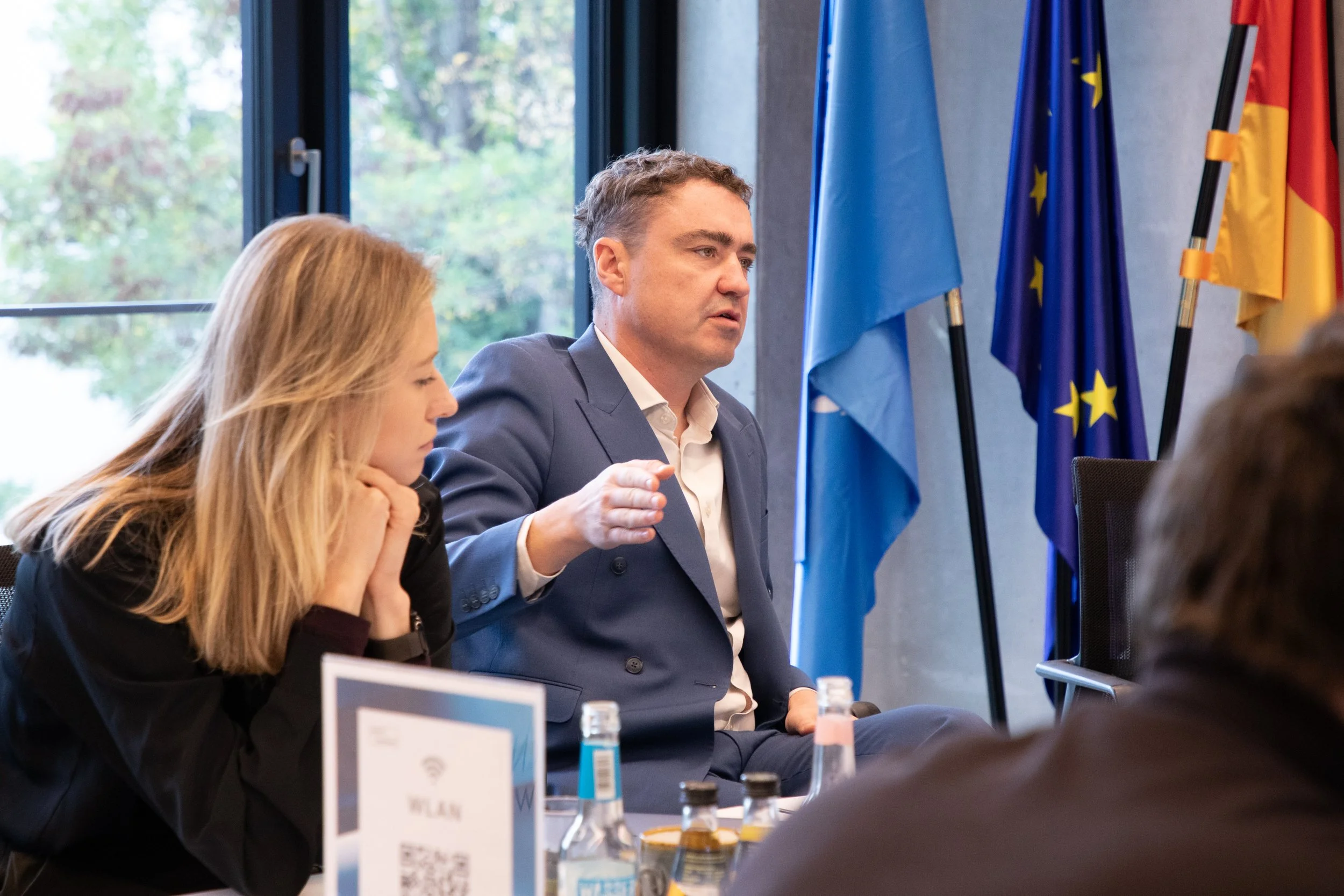
What must keep working when everything else is disrupted?
Our research argument
Resilience is a question of continuity.
Resilience begins where defense ends: with the people, institutions and essential systems that keep society functioning.
Wars, cyberattacks, pandemics, energy disruptions and supply-chain failures rarely respect the administrative boundaries through which governments organize their responsibilities. A disruption in one system can become a crisis for many others.
Public institutions must therefore do more than prepare emergency plans. They need to understand the dependencies that sustain everyday life, clarify responsibilities before a crisis, and build the practical ability to adapt under pressure.
The GTF Resilience research programme brings together international experience to examine how governments, infrastructure operators, businesses and communities can strengthen these capabilities.
Our areas of inquiry
The systems that cannot fail.
The GTF Resilience Framework explores the essential dimensions of societal continuity. The areas below are an editorial presentation of themes identified in the Summit discussions, not a finalized scored assessment model.
-
Healthcare, public administration, water, food and the services on which daily life depends.
-
Energy, telecommunications, transport, logistics and their interdependencies.
-
Clear decision rights, continuity arrangements and practical cross-sector cooperation.
-
Public trust, civic participation, community capabilities and preparedness skills.
-
Vendor concentration, supply chains, technological autonomy and critical resources.
-
Restoring functions, learning from disruption and strengthening future readiness.
Our whole-of-society approach
Preparedness cannot belong to one ministry.
Government cannot create resilience alone. Public agencies, critical-infrastructure operators, private suppliers, civil society and citizens all contribute to the continuity of essential functions.
The challenge is to turn this shared responsibility into workable arrangements: knowing who acts, how information moves, which capabilities are available, and what happens when normal systems become unavailable.
As the Summit discussions emphasized, the gap between preparedness on paper and preparedness in practice is where real vulnerability often emerges.
Understand
Identify critical dependencies
Which systems must operate, which actors control them, and how can failure cascade?
Prepare
Buld Practical Readiness
Clarify responsibilities, test scenarios and prepare alternatives before disruption arrives.
Adapt
Preserve the Capacity to Act
Maintain essential functions, communicate effectively and learn from each disruption.
The GTF Publication
GTF Summit Resilience Paper.
Research and perspectives developed around the Government Tomorrow Summit 2026, examining what societies need to maintain their essential functions during crises and disruptions.
The Paper connects international experiences, practical challenges, and potential avenues for applied collaboration.
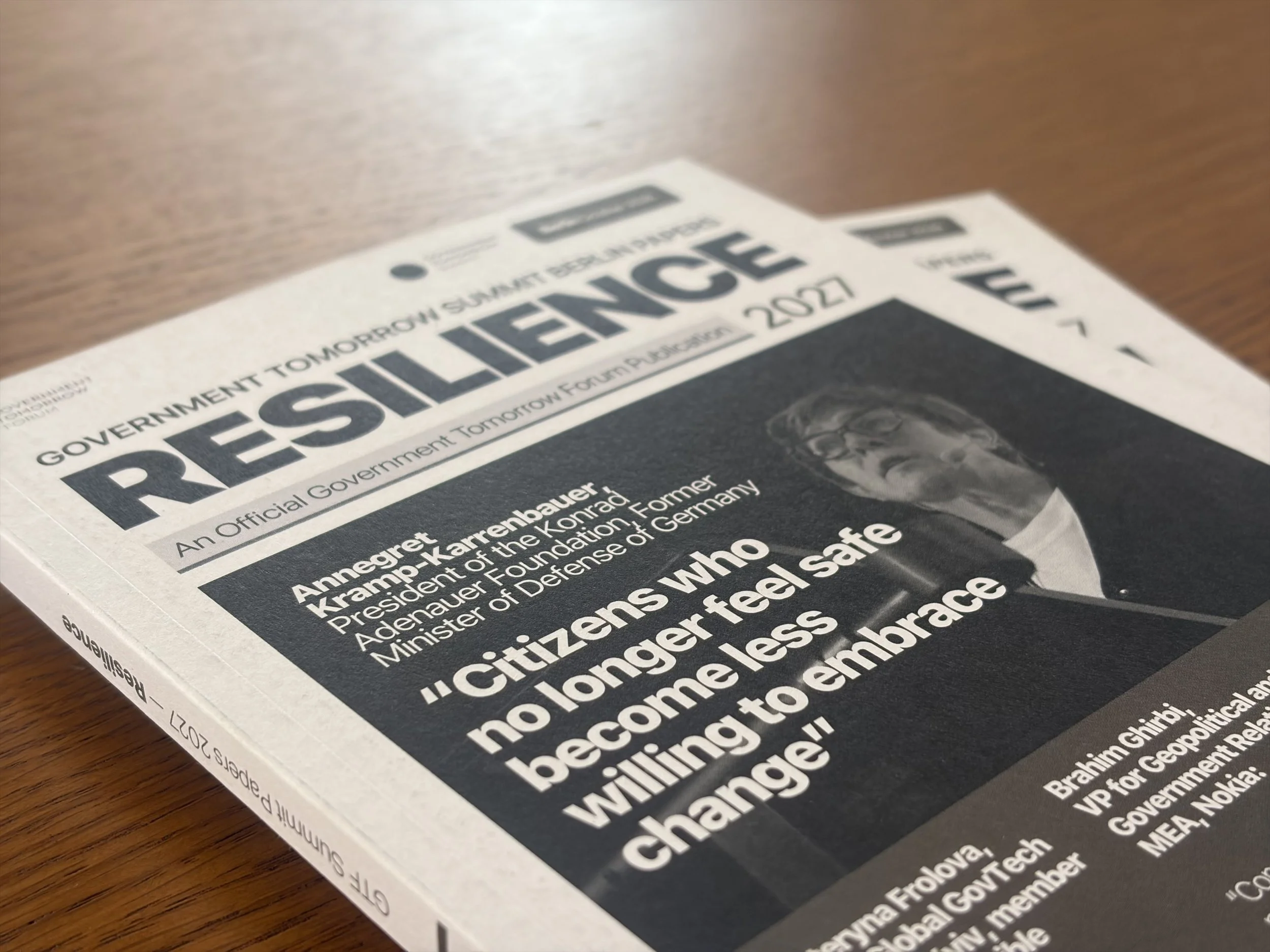
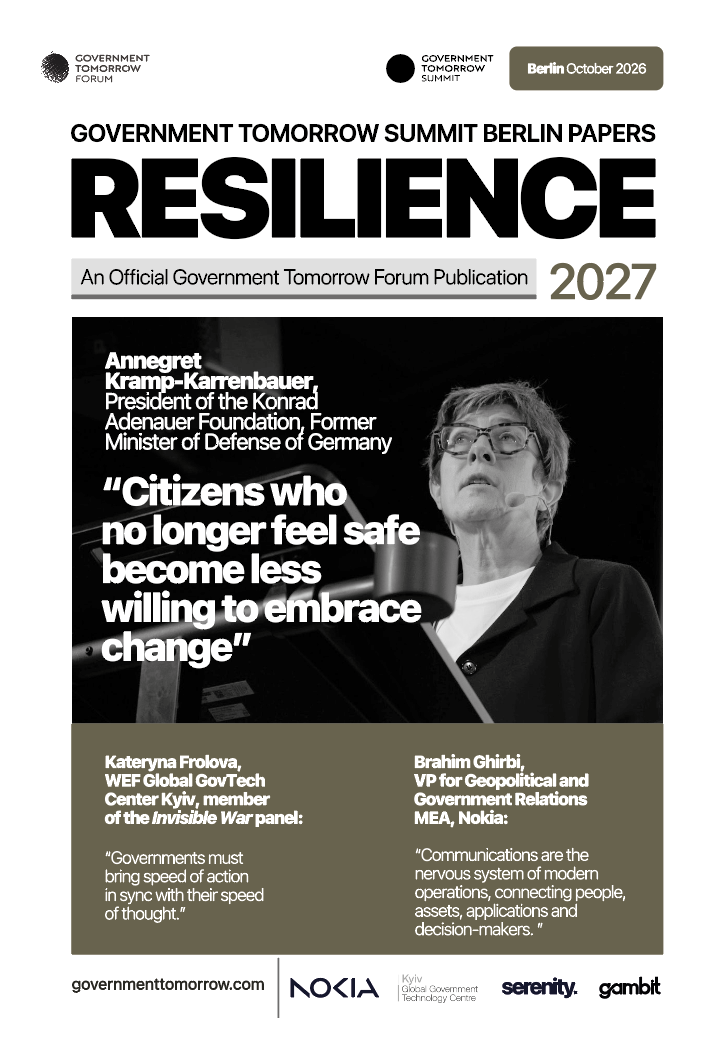
Government Tomorrow Forum’s Resilience Paper based on the Summit works in Berlin, October 2026. Includes:
• Annegret Kramp-Karrenbauer’s keynote on resilience as a democratic imperative
• The findings and recommendations of our Beyond Defence workshop
• The conclusions of the Invisible War panel
• Contributions from experienced public, private and international practitioners
• An examination of mission-critical infrastructure with Nokia, our Resilience Research Partner
• The GTF Minimum Viable State Canvas
• The GTF Continuity Readiness Diagnostic
• Practical pathways through which institutions can begin applying the work
Its central contribution is the GTF Resilience Framework.
Buying this copy supports GTF’s research work and its independence.
The GTF Paper on Resilience. Printed Version (115 pages).
Includes:
• Annegret Kramp-Karrenbauer’s keynote on resilience as a democratic imperative
• The findings and recommendations of our Beyond Defence workshop
• The conclusions of the Invisible War panel
• Contributions from experienced public, private and international practitioners
• An examination of mission-critical infrastructure with Nokia, our Resilience Research Partner
• The GTF Minimum Viable State Canvas
• The GTF Continuity Readiness Diagnostic
• Practical pathways through which institutions can begin applying the work
Its central contribution is the GTF Resilience Framework.
Build a society that can continue.
We welcome public institutions, infrastructure organizations, researchers and implementation partners interested in testing practical approaches to resilience.