
Resilience, Beyond Defense:
Building societies that can continue to function under pressure
Resilience is often discussed through the language of national defense. But contemporary crises do not respect traditional front lines—or the institutional boundaries separating security, infrastructure, healthcare, technology, and public administration.
War, cyberattacks, pandemics, infrastructure failures, disinformation, and supply disruptions all lead to the same essential question:
Can a society continue to function when its normal systems come under severe pressure?
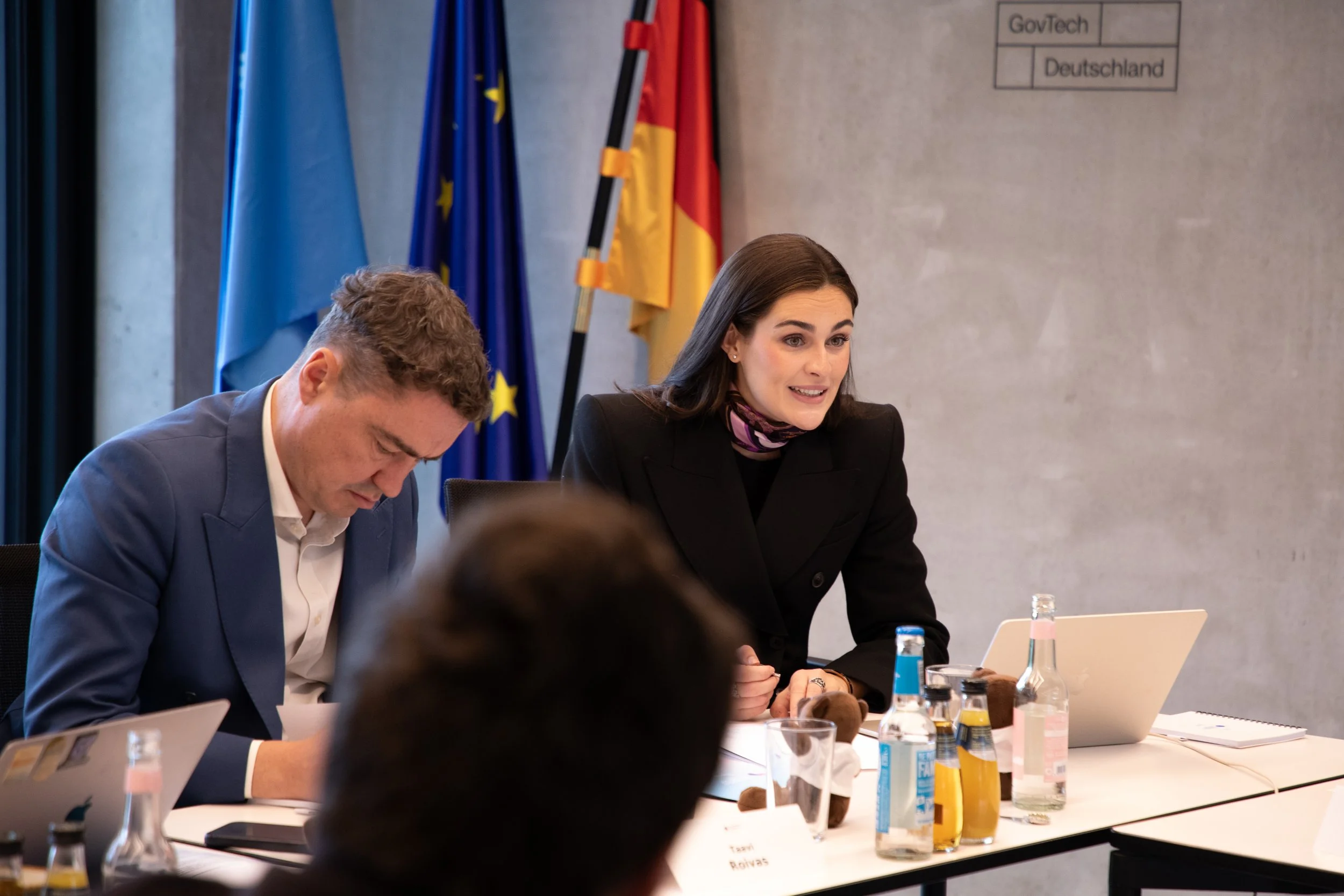
The Beyond Defense workshop expanded the resilience conversation beyond military capability. Participants examined the continuity of the systems on which everyday life depends: energy, telecommunications, healthcare, food, transport, information, and effective public decision-making.
Questions explored
What must continue functioning during a major crisis?
Are governments preparing for today’s threats—or yesterday’s?
How can lessons from Ukraine, humanitarian operations, COVID-19 and previous infrastructure failures be translated into action?
What responsibilities belong to national governments, cities, businesses, NGOs and communities?
How can governments access collective experience before a crisis rather than after it?
How do technological dependence, vendor concentration and vulnerable supply chains affect sovereignty?
How can societies develop practical skills and psychological readiness alongside physical infrastructure?
Building resilience beyond kinetic threats

A recurring concern was the gap between preparedness on paper and preparedness in practice. Strategies and reports are plentiful. Tested decision-making structures, trained populations, resilient networks and workable public-private arrangements are considerably harder to build.
Resilience begins where defense ends: with the people and systems that keep society functioning.
A resilient state is not one that expects to prevent every shock. It is one capable of absorbing disruption, maintaining essential functions, adapting rapidly and restoring capacity without abandoning its fundamental principles.
What Comes Next
The workshop will form the starting point for the forthcoming GTF Resilience Summit Paper. Developed through further research and conversations with participants and practitioners, it will translate the discussion into a clearer resilience framework, practical recommendations and project concepts that governments and their partners can test.