
Resilience of Societies:
A Democratic Imperative
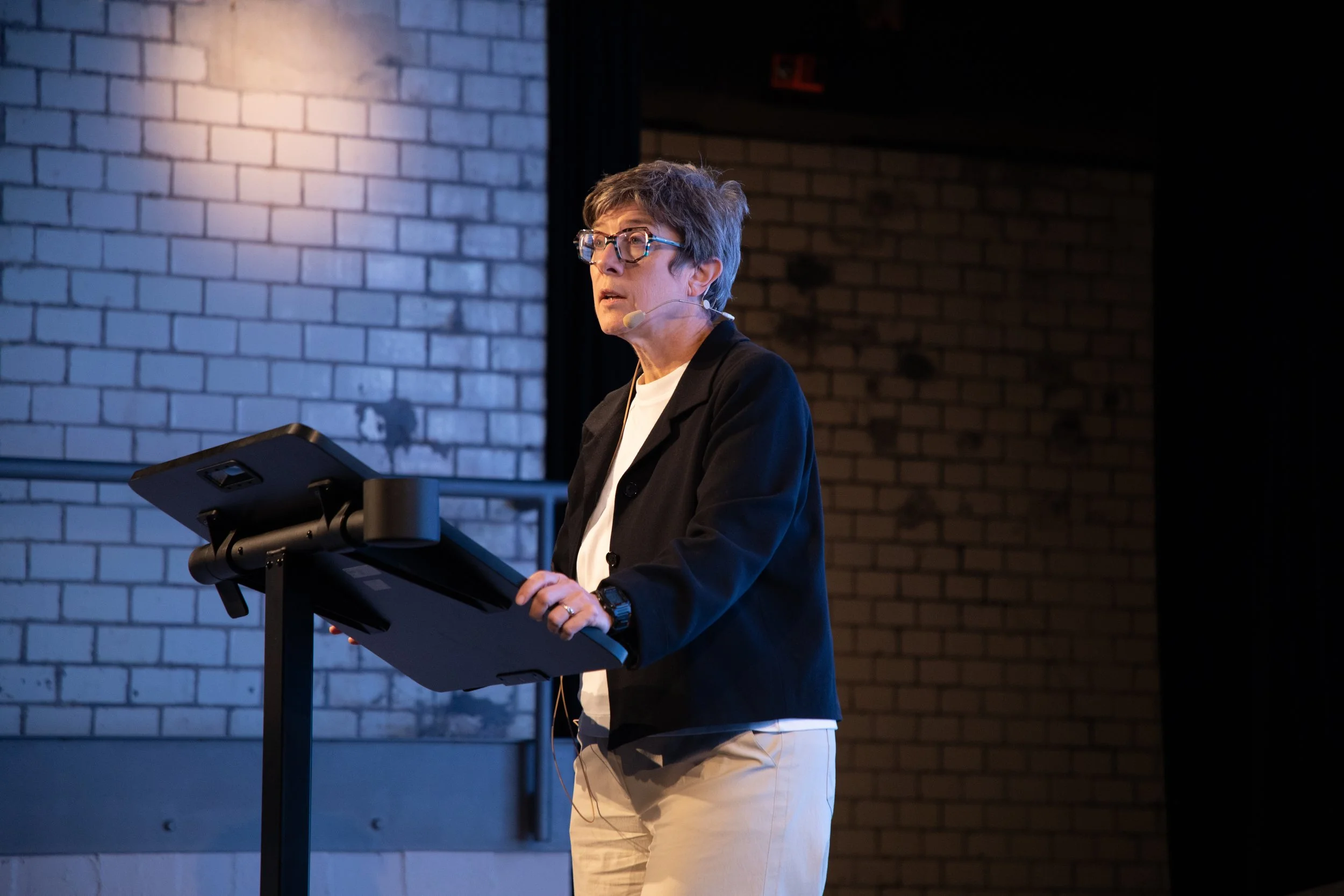

Annegret Kramp-Karrenbauer
Chairwoman of the Konrad Adenauer Foundation, Former Federal Minister of Defence of Germany
Keynote Address — Government Tomorrow Summit 2026,
12 October 2026 — Berlin, Germany
GTF’s Introduction
What makes a society resilient? Is it the strength of its military, the reliability of its infrastructure, the effectiveness of its institutions, or the willingness of its citizens to defend their shared values?
At the second edition of the Government Tomorrow Summit, held in Berlin in October 2026, Annegret Kramp-Karrenbauer, former German Federal Minister of Defence and Chairwoman of the Konrad Adenauer Foundation, addressed this question in her keynote on the resilience of societies.
Drawing on the lessons of the COVID-19 pandemic, Russia's war against Ukraine, and the growing complexity of contemporary security threats, Kramp-Karrenbauer argued that resilience must be understood as a fundamental condition of democratic stability.
Her central message is that military preparedness, institutional capacity, social cohesion and civic responsibility cannot be treated as separate concerns. They are interconnected foundations of a society's ability to withstand disruption while preserving its democratic character.
The address provides an important perspective for the Government Tomorrow Forum's work on resilience, sovereignty, and state capacity, and particularly on how our governments can prepare societies for an increasingly uncertain future.
Keynote Address
1. Resilience at the Centre of Democratic Stability
Ladies and Gentlemen,
It is a great pleasure and honour to join you today.
I would like to thank the organizers at the Government Tomorrow Forum for the invitation and for bringing together such a distinguished group of policymakers, experts, practitioners, and representatives of civil society.
For a long time, many people in Europe had grown used to the idea that serious disruptions belonged to the past. The idea of war on the European continent seemed almost unthinkable. Pandemics were considered rare, unlikely events. Critical infrastructure generally functioned reliably, global supply chains were robust, and most citizens experienced security as a stable background condition rather than an active political concern.
Then reality intervened.
COVID-19 happened. Almost overnight, societies that considered themselves stable and strong discovered how quickly normality can disappear. The pandemic exposed existing weaknesses in supply chains, tested our public institutions, and forced governments to make difficult decisions under great pressure.
More importantly, it showed that resilience is more than an abstract concept. It is the factor that determines whether societies can continue to function when they are confronted with unexpected shocks.
Barely had Europe begun to recover from the pandemic when Russia launched its full-scale invasion of Ukraine. The return of war to the European continent shattered long-held assumptions that had shaped an entire generation of policymaking. It reminded us that peace, stability and sovereignty can never be taken for granted.
And the threats we face do not fit neatly into traditional security categories.
Cyberattacks, disinformation campaigns, attacks on critical infrastructure, foreign interference and increasing geopolitical competition have shown how interconnected different security challenges have become. The distinction between internal and external security has become increasingly blurred, and vulnerabilities in one area can quickly create vulnerabilities in another.
One of the most important lessons of recent years is that resilience has moved from the margins of public policy to the centre of national and international security.
That is why the discussion we are having today matters so much.
Increasingly, the challenge is not simply how democratic states respond once a crisis emerges. We also have to ask whether they can preserve their ability to act and maintain public trust in an environment that is becoming more contested and less predictable.
In that sense, the discussion about resilience is ultimately a discussion about democratic stability.
2. Ukraine and the Lessons of Whole-of-Society Resilience
The war in Ukraine has shown this reality more clearly than any policy paper could.
Russia's invasion reminded us that military capability, deterrence and defence remain essential. But it also demonstrated that military strength alone does not determine whether a country can withstand external aggression.
In February 2022, many observers expected Ukraine to collapse quickly. What they saw instead was the ability of an entire society to persevere under extraordinary conditions.
Ukraine's armed forces played a decisive role, and international assistance proved indispensable. Equally important, however, was the fact that public administration, healthcare institutions and local communities continued to function despite constant pressure.
The ability to maintain these functions is an integral component of national resilience.
We have also witnessed an extraordinary mobilisation of civil society. People have organised support networks, helped those forced from their homes, supported local communities and contributed to the country's defensive effort in many different ways.
This has required repeated adaptation by the Ukrainian people as circumstances changed. Yet through it all, they managed to preserve an extraordinary sense of national unity and purpose.
There is an important lesson for us all in this experience.
For a long time, we have treated the spheres of security policy, economic policy, infrastructure policy and social policy as largely separate fields. But today's geopolitical environment suggests that these distinctions are increasingly difficult to maintain.
The reliability of energy supplies, the security of digital networks, the resilience of industrial production and the robustness of public institutions all have direct consequences for national security.
Russia's aggression has illustrated this reality quite clearly, demonstrating how comprehensive and multifaceted destabilisation efforts can be.
Military operations have been accompanied by cyberattacks, information operations, attempts to influence public debate, attacks on infrastructure and efforts to exploit political divisions.
The purpose of such actions is not only to achieve military gains, but more broadly to weaken confidence, undermine social cohesion and create uncertainty.
If a society begins to believe that the costs of defending its interests are greater than the costs of abandoning them, an aggressor has already achieved something.
For democracies, this means that resilience has become a strategic necessity.
It is no longer sufficient to focus exclusively on military preparedness. We also need to strengthen societal cohesion, institutional effectiveness and public trust.
3. Security, Freedom, and the Democratic Immune System
This brings me to a broader point.
Security and resilience are fundamental pillars of freedom and democratic stability.
Without security, freedom becomes fragile. And without resilience, democracy becomes vulnerable.
In Germany, across Europe and throughout the democratic world, they provide the foundation upon which free societies operate. They enable democratic governments to function effectively, create the conditions for economic prosperity, protect individual liberties and allow citizens to pursue their lives with confidence in the future.
This may sound self-evident, yet it is a lesson that democracies occasionally forget.
We rightly emphasise participation, political rights and individual liberties. These remain among the greatest achievements of democratic systems. At the same time, they depend on an environment in which citizens feel secure and institutions are capable of acting effectively.
Citizens who no longer feel safe become less willing to embrace change. They become sceptical of reforms, less inclined to compromise and more susceptible to those who offer simple solutions to complex problems.
This is precisely why authoritarian and extremist actors try to create insecurity.
They understand that democracies can be weakened long before military force is applied. They seek to exploit vulnerabilities, deepen divisions and undermine confidence in democratic institutions.
This may take the form of cyberattacks and sabotage, as well as economic coercion or political interference. It may also manifest itself through disinformation campaigns and the deliberate amplification of social tensions and political polarisation.
The methods differ, but the purpose is always similar: to weaken a society's confidence in itself.
This is why security is far more than a defence issue, and why security policy cannot be regarded as a niche issue reserved for defence ministries, intelligence agencies or military planners.
It is a cross-cutting challenge that concerns the resilience of institutions, the reliability of infrastructure and the integrity of information spaces.
To counter such anti-democratic destabilisation and strengthen resilience, democratic societies need what we might call a democratic immune system.
That requires media literacy to combat disinformation, strong civil society networks and clear legal boundaries.
Resilience is often treated as a synonym for crisis response. These elements remain important. However, we must understand resilience more comprehensively.
A resilient society is not simply a society that responds effectively to emergencies, but a society that can absorb shocks, adapt to changing circumstances and continue to function without abandoning its democratic principles.
The state has a particular responsibility in building such resilience, because the legitimacy of democratic institutions depends in part on a government's ability to deliver essential services and maintain its capacity to act when citizens need it most.
Democratic governments therefore face a fundamental balancing act.
A democracy that cannot act loses trust, and a democracy that abandons freedom loses its very essence.
The challenge is to preserve both liberty and effectiveness at the same time.
That calls for practical work before a crisis arrives. It requires capable institutions, clear decision-making structures and long-term investments in preparedness.
We must protect our critical infrastructure, strengthen our cybersecurity, improve our crisis-management structures and reduce our strategic vulnerabilities.
What is needed is to gather the relevant information and bring it together; to identify patterns; to think in scenarios; to prepare procedures and clarify responsibilities; and to be candid with the public about the reasons for these efforts and what to do.
The goal is not to eliminate every risk. No government can achieve that. It can, however, strengthen society's ability to withstand disruption and recover from it.
But governments cannot build resilience on their own.
Ultimately, a resilient democracy depends on citizens who remain engaged in public life, who contribute to their communities and who are willing to accept responsibility for the common good.
Across Europe, millions of people support social cohesion every day through their voluntary engagement, local initiatives, community organisations and civic participation.
This civic centre is one of the greatest strengths of democratic societies. Where it remains strong, societies are more likely to withstand polarisation and external pressure.
Resilience is therefore not solely a matter of institutions or crisis planning.
It is a whole-of-society task.
4. European Sovereignty and International Cooperation
Of course, we must acknowledge that freedom cannot be safeguarded at home alone.
We also need active engagement in the international environment. Preventive diplomacy, international cooperation and effective development cooperation all have a role to play in our security policy.
Addressing crises before they escalate is often more effective and less costly than responding after conflicts have emerged.
This is all the more relevant in an international environment where the challenges we face increasingly transcend national borders.
We cannot manage terrorism, cyber threats, migration pressures, organised crime, climate-related risks and geopolitical instability on our own.
These threats require cooperation among partners who share common interests and common responsibilities.
We can clearly see that today's security challenges increasingly require European answers.
External threats such as Russia's war of aggression against Ukraine, China's growing influence and the unpredictability of the current U.S. administration demonstrate that only a capable European Union can safeguard its sovereignty.
Europe must assume greater responsibility for its own security.
That does not mean turning away from transatlantic cooperation.
On the contrary, the United States remains an indispensable ally, and NATO remains the cornerstone of our European security.
Our transatlantic partnership continues to be of fundamental importance for stability on both sides of the Atlantic. At the same time, a stronger European contribution strengthens rather than weakens that partnership.
Europe needs to become more capable of acting when its security interests are at stake.
It must be able to contribute more effectively to collective defence, respond to emerging threats and strengthen its capacity to protect critical interests.
Our defence can only succeed if it becomes more European in character and increasingly able to complement the security role of the United States.
This requires both a strong Bundeswehr and a strong European pillar within NATO.
5. Resilience as a Shared Democratic Responsibility
Overall, we should be realistic about what resilience can achieve.
We will not be able to remove every risk. Complex societies will always remain exposed to a wide range of unforeseen developments, whether political, technological, economic or natural in origin.
The more relevant question is whether democratic states possess the capacity to continue functioning effectively when confronted with those challenges.
The answer depends on many factors: the strength of institutions, the credibility of deterrence, the protection of critical infrastructure, the quality of governance, the adaptability of economies and the cohesion of societies.
What unites these factors is that they all contribute to a state's capacity to act under pressure.
Yet public institutions alone cannot create resilient societies.
No constitution can endure indefinitely if citizens become indifferent. No government can decree social cohesion.
Ultimately, resilient societies depend on citizens who are willing to assume responsibility.
Democracy begins not only in parliaments or ministries. It begins in everyday life.
It begins where people contribute to their communities rather than withdrawing from them.
Where people remain engaged in public life, resilience grows.
Resilience is therefore not merely a security concept, but a democratic imperative.
It is the foundation that enables free societies to withstand pressure without abandoning their principles.
And it is ultimately a responsibility that belongs to all of us.