
"I ran on a smart council platform and lost to potholes. That's the most instructive thing that's ever happened to my thinking about cities."
Christchurch-based social entrepreneur, investor, and leading New Zealand thinker Karim Sabet on leadership versus consultation, why 'smart city' is an outdated name for what’s going on in the urban tech universe, and what New Zealand's cities have been quietly getting right.
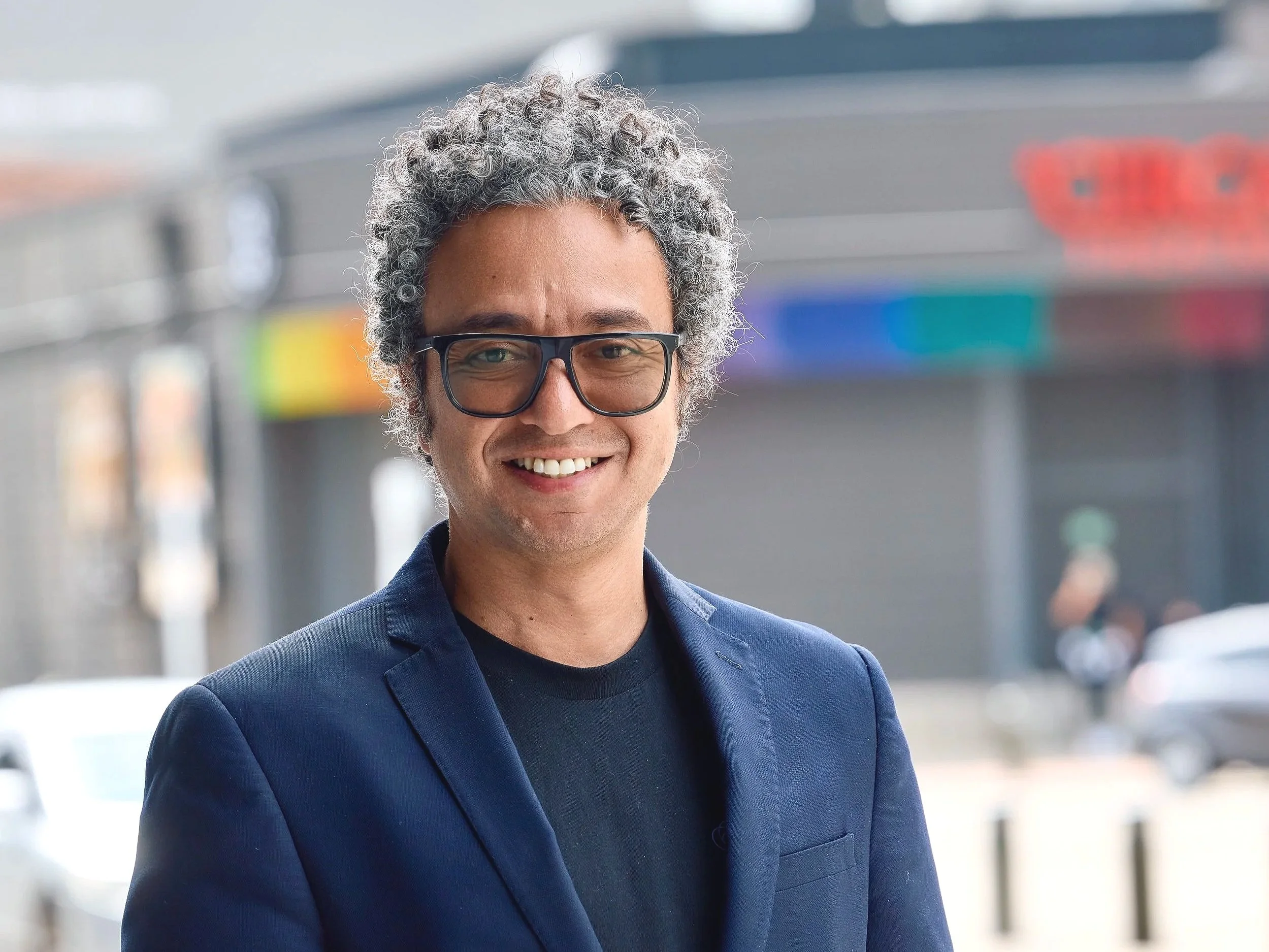
Government Tomorrow Forum: You lived and worked across twelve cities in ten countries: Dakar, Tokyo, Cairo, Eugene, Kuala Lumpur, Kinshasa, Luanda, Istanbul, Abu Dhabi, Dubai, Auckland, and now Christchurch. Most people writing about cities of the future read about them. You lived in them. What did it give you that desk research couldn’t?
Karim Sabet: An intolerance for abstraction, mainly. When people talk about the city of the future in a conference room in London or Paris, they're usually describing a shinier version of those same cities. Flying taxis, sensor grids, digital twins. I grew up watching a video phone in Tokyo in the 1980s: a chunky black-and-white screen where you could see the person on the other end, if they had the same device. That was FaceTime, thirty years early. Japan was building that technology before the rest of the world had a name for it, and doing it without sacrificing the temples, the food, the texture that makes a place worth living in rather than just moving through.
What actually living across twelve cities teaches you is the gap between what a city looks like and what it feels like from the inside. Dubai is extraordinary. Within a single generation, it transformed from a small trading settlement into a city that operates with a level of digital integration and service delivery that most Western cities cannot match. But that transformation did not come from technology. It came from leadership and a very deliberate decision that the status quo was not acceptable. The leaders brought in subject matter experts from everywhere, kept what worked, and moved fast. Compare that to Libya: the same geography, similar natural resources, different leadership entirely. One built itself into one of the world's most functional cities within that same generation. The other went backwards. That contrast shaped how I think about cities more than any framework or policy paper.
“Technology is not the point. Outcomes for the people living there are the point. The clearest way I have heard it put: the goal should be for the state to become invisible to citizens. Not because it is hiding anything, but because people have better things to think about than their government”
Then you have Cairo. Extraordinary history, extraordinary culture, a greater city of over twenty million people, and traffic so bad that the city is effectively paralysed for hours a day. People organise their entire lives around not moving. Istanbul is the same. Beautiful cities, ancient cities, but the infrastructure was built for a different era and growth came faster than anyone planned for. In both cases the problem is not a lack of ideas. It is the weight of what is already there.
Christchurch, where I live now, went through something terrible that created a genuine reset. The earthquakes forced a blank page. That is not a model anyone would choose, but what came out of it is New Zealand's newest city: low congestion, new construction, a central area with real life in it. Sometimes the blank page is the most powerful tool in urban planning. You just rarely get one without a disaster first.
GTF: "City of the future" is one of the most used phrases in urban policy. You say it misses something fundamental. Where does the mainstream conversation go wrong?
KS: The gap is about who the future is actually for. Every smart city presentation I have seen is essentially directed at people who already have the most access: to technology, to mobility, to resources. And the people who actually need the city to work, who rely on public transport, who cannot work from home, who need the hospital to function and the permit to come through and the rubbish collected, they are getting a slide deck about facial recognition and autonomous vehicles.
The question that does not get asked often enough is: when a city automates, who captures the value? If traffic management becomes more efficient, does the benefit flow to commuters, or to property prices, or to the technology vendor who owns the infrastructure? This is not an argument against technology in cities. It is an argument for being honest about incentive structures before you build them.
“Within the smart city industry, earning trust requires specific things: services that work consistently, visible consequences when officials misuse access to data, and public transparency when systems fail”
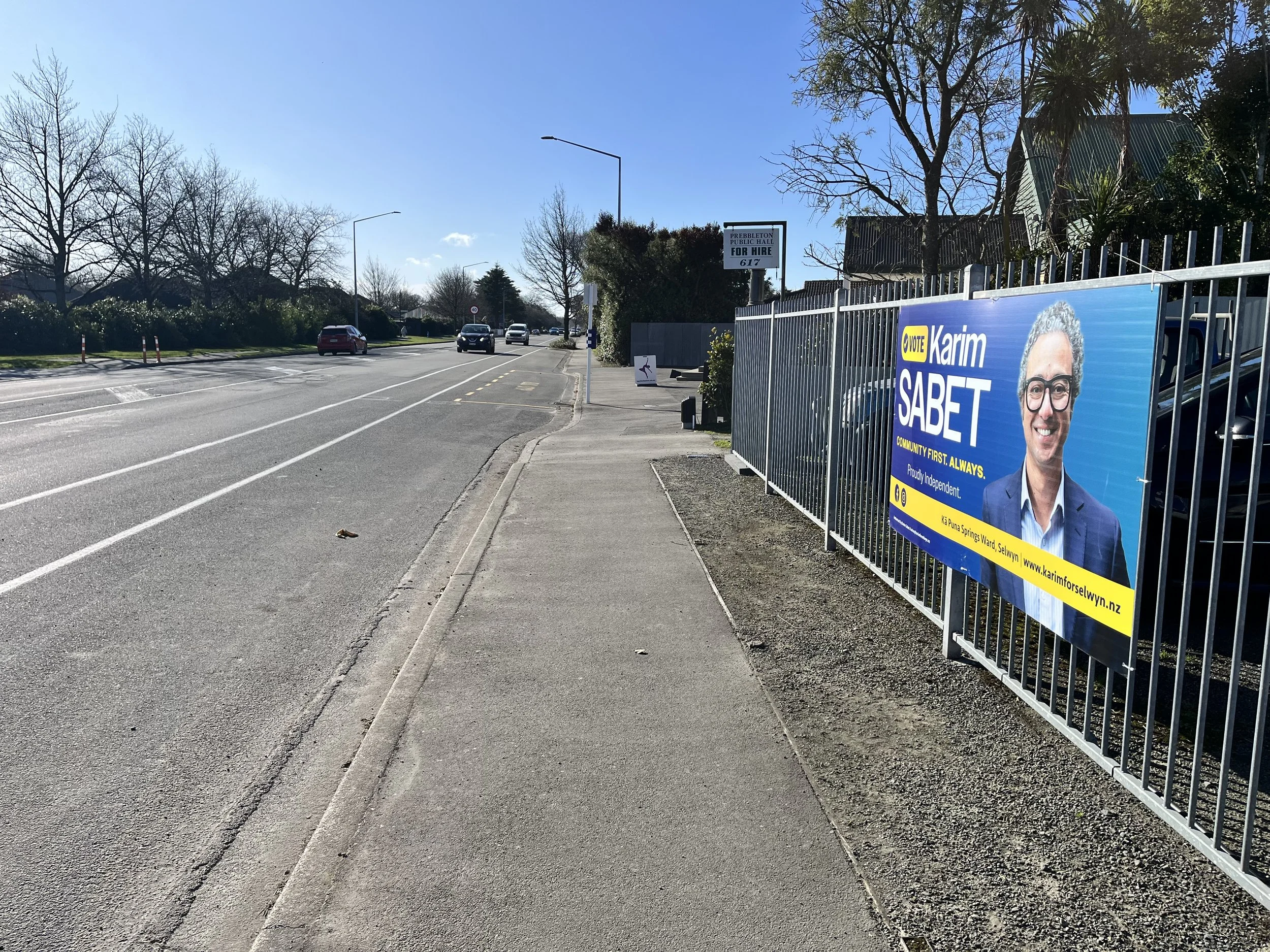
My own experience makes this concrete. When I ran for local government in New Zealand, my platform included technology, modern systems, a different approach to council operations. I did not win. And when I looked at it honestly, the people who vote in local elections mostly want their rates lower, their potholes filled, their speed bumps maintained. Those are legitimate things to want from a city. But the smart city discourse talks past them completely. It speaks a language of innovation and disruption to an audience that just wants things to work.
The other thing that came up constantly was surveillance. "Where does the data go? Are you monitoring us?" People are not wrong to ask that. The smart city industry has not earned the trust it expects. Earning it requires specific things: services that work consistently, visible consequences when officials misuse access to data, and public transparency when systems fail. That combination takes decades to compound. There is no shorter version. And until cities can answer those questions in plain language, not in white papers but in the language a seventy-year-old in a regional town understands, the credibility problem is not going away.
Maybe the phrase needs a new name entirely. "Connected city" is closer to what people mean. "City that works" is closer still. Technology is not the point. Outcomes for the people living there are the point. The clearest way I have heard it put: the goal should be for the state to become invisible to citizens. Not because it is hiding anything, but because people have better things to think about than their government.
There is a difference between "smart city" as a tech industry brand and "city of the future" as a genuine aspiration. The first has a credibility problem. The second, when it is backed by real decisions and real investment rather than a PowerPoint, is exactly what cities should be reaching for. What the City of Moreton Bay is doing: building infrastructure, attracting international business, planning around a thirty-year horizon, that is not the hollow version. That is what the phrase should mean.
“Libya’s GDP per capita today is $6,800. Oil accounts for 95% of exports. Since 2011 there have been multiple governments and armed factions and no meaningful diversification in fifty years. The UAE’s per GDP capita is around $49,000. Same decade. Same resource. Different question.”
GTF: You show the comparison between Libya and the UAE as the thing that shaped your thinking about cities more than almost anything else. But you are also firmly pro-democracy. How do those two things sit together?
KS: Let me be clear on the first part. I am pro-democracy. I live in New Zealand by choice, and part of that choice is the system of government here. I have also worked and lived in places without democratic norms, and I have seen what that costs people over time. I am not ambivalent about that.
Libya in the early 1970s had one of the highest per capita incomes in Africa. Oil discovery in the 1960s had the economy growing at over 20% a year, the fastest in the world. The UAE was founded in 1971 from fishing and pearl-diving villages. Dubai's population was 59,000.
Sheikh Mohamed bin Rashid looked at Dubai's oil and asked what would happen when it runs out. Everything he built was the answer to that question. Gaddafi never asked it. He nationalized the oil and built nothing that could survive without it.
Libya's GDP per capita today is $6,800. Oil accounts for 95% of exports. Since 2011 there have been multiple governments and armed factions and no meaningful diversification in fifty years. The UAE's per GDP capita is around $49,000. Same decade. Same resource. Different question.
The question that interests me is how you get that same quality of long-term thinking operating inside democratic systems, where electoral cycles are short and the political incentives often run against ambitious planning. New Zealand has a live version of this question right now. The proposed local government reforms, which could see the creation of larger, amalgamated councils, are exactly the kind of structural decision that requires elected leaders to absorb short-term friction for long-term gain. Fewer councils with clearer mandates could mean better coordinated infrastructure, more coherent climate planning, and technology investment at a scale that individual, smaller councils cannot sustain. Those are genuinely good outcomes. But they require leaders who are willing to make the case for the next thirty years, not just the next three, and who trust that the communities they represent can handle that conversation.
I see it in the places I work with and live in. Christchurch is perhaps the clearest example in New Zealand right now of what a city becomes when leadership makes the most of a blank page.
After the earthquakes, it rebuilt not just the infrastructure but the feel of the place: a central city with genuine energy, new architecture, low congestion, a growing cultural life, and one of the most sophisticated smart city programs in the country running quietly underneath all of it.
People who come to Christchurch now often say they did not expect what they found. That gap between expectation and experience is exactly what good city leadership creates. The City of Moreton Bay, north of Brisbane, is building something similar on a different trajectory. A city of over half a million people, using the 2032 Olympics not as a one-off event but as a forcing function for twenty years of economic positioning, infrastructure investment, and international business development. That kind of forward planning does not happen by accident. It comes from leaders who have decided what they want the city to be and are doing the unglamorous work of getting there.
That is not a democratic or undemocratic argument. It is a leadership argument. The difference between cities that improve and cities that stagnate is rarely a shortage of ideas. It is whether the people in leadership positions have the confidence and the backing to act on the long view.
GTF: You have worked across Africa, seen mobile banking skip an entire infrastructure generation in Kenya, and you keep pointing to what Africa has already built as one of the most underappreciated stories in urban and civic technology. What should the world's cities be learning that they are not?
KS: The core lesson is leapfrogging, and honestly, the world has still not absorbed it. Kenya built M-Pesa: a mobile banking system operating over basic phones that reached the majority of the adult population within a few years of launch, in a country with very few bank branches per capita. The system did not succeed despite the lack of traditional infrastructure. It succeeded partly because there was no legacy system defending its own territory. When you have to build from scratch, you build for what people actually need.
“Resource wealth and city quality are not the same thing. Leadership is the variable.”
I was in Nairobi in 2008 and I got into a taxi where the driver had WiFi on his phone. I had not seen that anywhere else I had been. People dismiss that kind of detail as anecdote, but it is a signal. The places that appear behind on a conventional development index are often ahead in specific, important ways, and we miss it because we are looking at the wrong metrics.
Rwanda is the most powerful example I know. In 1994, 800,000 people were killed in 100 days. The country's GDP collapsed by more than half. I am not going to pretend the politics are clean: Kagame has held power since his forces ended the genocide, Freedom House classifies Rwanda as not free, and the democratic record is genuinely contested. But what he built afterwards is real. In 2000 he launched Vision 2020: a 20-year plan with written, measurable targets. Rwanda has averaged close to 8% annual growth since. Electricity went from 6% of the population in 2009 to 75% by 2024. Kigali is now Africa's top-ranked smart city. Microsoft and G42 invested a billion dollars in a Kigali data centre in 2024. None of that started with technology. It started with a plan, zero tolerance for corruption, and investment in people. The technology came after. That order of operations is the lesson.
What Africa has not solved is physical infrastructure: roads, power grids, logistics. The Democratic Republic of Congo is the most painful example I have seen directly. The colonial withdrawal in the early 1960s left almost nothing behind in terms of institutional capacity, and the roads today feel largely unchanged from that period. Luanda tells a different version of the same story. Angola has oil wealth that should, on paper, be more than sufficient to build a functional city. What you find instead is a capital where the infrastructure never caught up with the money, and the gap between the resource base and the lived experience of most residents is as wide as anything I have encountered. Resource wealth and city quality are not the same thing.
Leadership is the variable.
The same continent that pioneered mobile money is also living with physical infrastructure that decades of development investment have barely touched. That gap, between what technology enables and what physical planning delivers, is the defining tension in urban development everywhere. It is just more visible in Africa, and that visibility should be instructive.
GTF: You have described New Zealand as a country the world tends to overlook when it comes to technology and urban innovation. Why does that happen, and why does it matter?
KS: The international picture of New Zealand is still sheep, dairy, and extraordinary scenery. And I say that with some affection, because the landscape is part of what drew me here in the first place, watching Lord of the Rings films in Cairo and thinking the scenery was unreal. But the technology sector here is genuinely world-class in ways that are almost invisible internationally.
The data visualisation company I co-founded, OrbViz, won a community engagement award working with Christchurch City Council on making complex government financial data legible to ordinary residents. That is a small example, but it points to something larger: there is a particular kind of creative pragmatism in New Zealand that comes from distance, from limited resources, and from building for a country small enough that you often know your users personally. When you cannot rely on scale, you have to rely on thinking differently.
Contented AI, one of New Zealand's fastest growing AI startups, built a conversation intelligence platform for corporates and governments being adopted across Australia and New Zealand. The AI tools making the most difference right now are not the ones replacing human decisions.
They're the ones making human conversations easier and better. Cities don't need AI to automate their relationship with communities. They need AI that helps them listen at scale and respond with the kind of specificity that makes a person feel heard. That's a different brief entirely, and it's the one worth building for.
When the Soviet Union collapsed, most new nations inherited institutions that were either hollowed out or built for someone else's purposes. Estonia inherited the Institute of Cybernetics, the Soviet Union's centre for computer programming and microprocessor development, based in Tallinn. The same people who worked there went on to build X-Road and the foundations of the Estonian digital state. The company that built X-Road traces its origins directly to that institute.
Estonia did not start from a blank page. It started with people who already knew what they were doing, and a government that recognised that as the thing to bet on. Computing was Estonia's natural resource. They just had the sense to use it.
The interoperability architecture that Estonia pioneered with X-Road, a system where government databases communicate directly without creating a centralised data store now adopted in over twenty countries, is the direction that New Zealand's restructured digital government strategy is moving in. We are not there yet. But we are asking the right questions, and there are people here building the answers. For national governments watching from the outside, the question worth asking is not whether New Zealand has solved it. It is whether your own government has framed the problem correctly yet.
What I have found working on the ground in New Zealand is that businesses and officials here genuinely want to know what is happening elsewhere. They are curious, internationally connected, and commercially adventurous in ways that people from outside underestimate. But for international cities looking to build relationships with NZ businesses, the lesson is simple: you have to come to them. New Zealand's geography means it gets overlooked by economic development agencies that concentrate their presence around major Northern Hemisphere hubs. A city that sends someone here, makes the case directly, and builds relationships over time will find a market that is ready to listen and act. That is not true everywhere.
The wider argument I would make is this: the cities that work out how to function at smaller scale, with climate exposure, across distance, with real community accountability, will be more useful models for the world than the megacity cases that dominate the literature. The challenge New Zealand shares with the wider Pacific is distance. Not just from major markets, but from the conversations and connections that shape how cities develop. For a long time that distance was a disadvantage you simply had to absorb. What has changed is that technology has made connectivity genuinely available to anyone willing to use it deliberately. The most important thing cities can do right now, for their businesses, their residents, their economic partners, is not to automate. It is to connect. Connect businesses to opportunity. Connect governments to each other. Connect people to ideas they would not otherwise reach. M-Pesa did not just move money. It connected people who had been excluded from an entire economic system. The cities that figure out how to use technology as a connector rather than just an efficiency tool will be the ones that matter in twenty years. New Zealand and the Pacific have every reason to lead that conversation. The infrastructure of isolation is gone. What replaces it is a choice.
New Zealand is already doing that work. Five million people, one of the most innovative technology sectors in the world relative to its population, a governance culture that values accountability and community trust. The instinct here has always been to get on with things without making too much noise about it. That modesty is genuine, and there is something to respect in it. But the world right now is looking for models that work at human scale, with climate exposure and real community accountability, and New Zealand has exactly those models. The noise needs to get louder. The story is already there. It just needs to be told.
The person who challenged me about potholes at that campaign event was not wrong. Basic things need to work. What I have come to understand is that the best technology, the kind that actually changes cities, is just a more honest way of making sure they do.
Karim Sabet is Director of Frontline Partners, a New Zealand-based consultancy, and Senior Trade & Investment Adviser for the City of Moreton Bay, Queensland. He is the first in-market city representative an Australian local government has appointed in New Zealand. Raised in a diplomatic household across three continents, he has lived and worked across twelve cities in ten countries. He is Sector Lead for Local Government at Contented AI, one of NZ's fastest growing AI startups, and co-founded OrbViz, a data visualisation platform that won a national community engagement award for its work with Christchurch City Council. He is co-founder and former Chair of the Africa New Zealand Business Chamber and a member of the Middle East New Zealand Business Council. He stood for the Selwyn District Council in 2025, New Zealand's fastest-growing district.